Max cashout rules are one of the most misunderstood parts of casino bonuses, especially when an offer looks generous at first glance but the withdrawal limit is buried deeper in the terms. For New Zealand players, this matters because a bonus can seem high-value on the surface while still placing a firm cap on how much can actually be withdrawn from bonus-related winnings.
This guide explains how max cashout rules usually work in NZ-facing casino bonuses, where they commonly appear, why they matter, and how to compare offers more realistically before claiming them. The goal is not to promote any operator, but to help readers understand one of the bonus terms that most often changes the practical value of an offer.
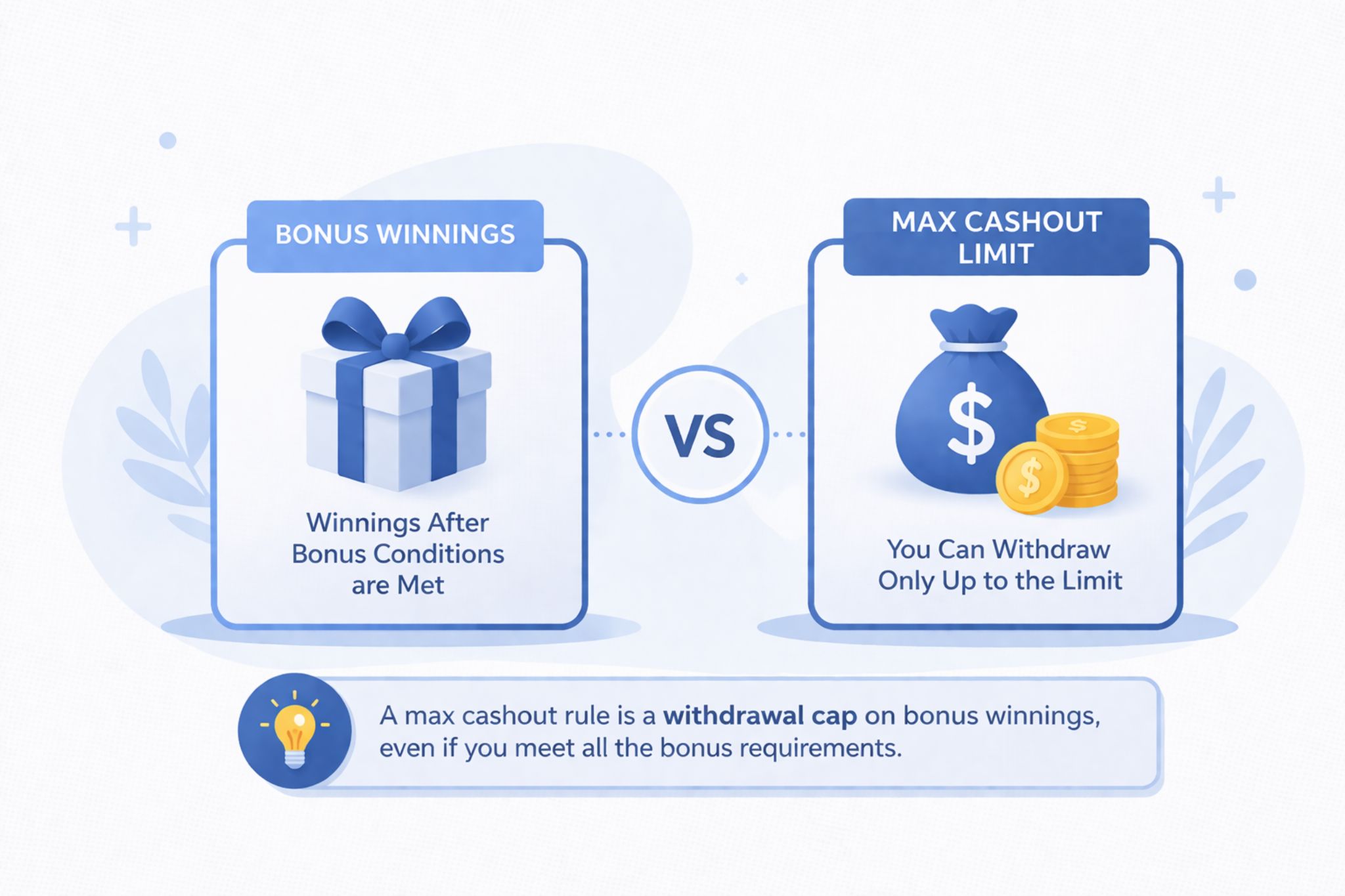
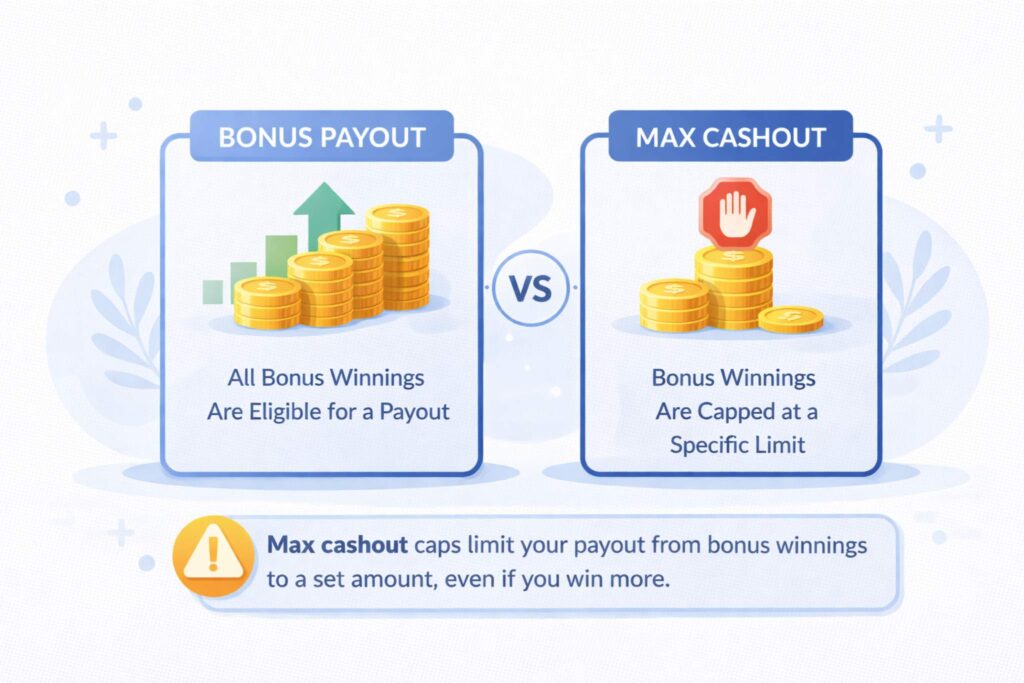
Quick answer: a max cashout rule is a withdrawal cap linked to bonus winnings. It means that even if you win more while using a promotion, you may only be allowed to withdraw up to a stated limit once the relevant bonus conditions have been met.
Contents
- What is a max cashout rule?
- Why do max cashout rules matter so much?
- Where do max cashout rules usually appear?
- How is max cashout different from wagering?
- How can max cashout change the real value of a bonus?
- What should NZ players check before claiming a bonus?
- How do max cashout rules connect to withdrawals?
- Editorial summary
- FAQ
What is a max cashout rule?
A max cashout rule is a cap on how much money can be withdrawn from bonus-related winnings. In practical terms, it means the casino may allow you to complete the promotion and satisfy the bonus conditions, but still limit the amount that can be paid out from that bonus activity.
This rule is especially common in offers that look “low risk” or “free to try,” because the operator may want to control the payout exposure attached to the promotion. The cap can be stated as a fixed amount, a multiple of the bonus, or another defined limit in the bonus terms.
Why do max cashout rules matter so much?
Max cashout rules matter because they can change the practical value of a bonus far more than the headline suggests. A promotion may advertise free spins, bonus funds, or a no deposit offer, but the true upside can be much lower if winnings are subject to a strict withdrawal cap.
This is one reason bonus comparisons should never focus only on the top-line amount. Players who already understand bonus terms explained simply will usually spot this quickly, but newer users often focus first on the size of the offer rather than on the structure behind it.
Where do max cashout rules usually appear?
They can appear in several bonus categories, but they are most often associated with offers where the operator gives promotional value upfront or reduces the cost of entry. In practice, players often see them in:
- No deposit bonuses
- Free spins offers
- Small deposit promotions
- Selected welcome bonus campaigns
- Occasional cashback or special campaign offers
This does not mean every offer in those categories will include a cap, but it does mean the term is common enough that it should be checked every time. It is particularly relevant when comparing free spins bonuses or deciding whether a no wagering bonus is really as flexible as it sounds.
How is max cashout different from wagering?
Wagering and max cashout are related, but they are not the same thing. Wagering tells you how much play-through is required before winnings may become eligible for withdrawal. Max cashout tells you how much you may be allowed to withdraw even after those conditions are met.
That means a player can satisfy the wagering requirement successfully and still face a limit on the final amount that can be taken out. This is why understanding wagering requirements is necessary, but not enough on its own when evaluating a bonus.
How can max cashout change the real value of a bonus?
A max cashout cap changes the upside of a promotion. Two offers can look similar in marketing language but feel very different in practice once the payout limit is considered.
No deposit example
A no deposit bonus may sound attractive because it allows play without an upfront deposit. But if the winnings are capped at a relatively modest amount, the player should view the offer as a limited trial-style promotion rather than as open-ended value.
Free spins example
Free spins can also create confusion here. A player may win more than expected from the spins themselves, yet still find that only part of the result is ultimately withdrawable once the max cashout rule is applied.
Low deposit example
Low deposit bonuses can be affected in a similar way. Even when the deposit requirement is small, the combination of wagering, time limits, and payout caps may make the offer less useful than it first appears. That is one reason comparisons of $1 and $5 minimum deposit casinos should look beyond the entry cost alone.
What should NZ players check before claiming a bonus?
Before claiming any bonus where withdrawals may matter later, NZ players should review the full term structure, not just the headline. The most useful checklist usually includes:
- Whether a max cashout rule exists at all
- Whether the cap is fixed or linked to the bonus amount
- Whether wagering applies to bonus only or deposit plus bonus
- Which games count toward the terms
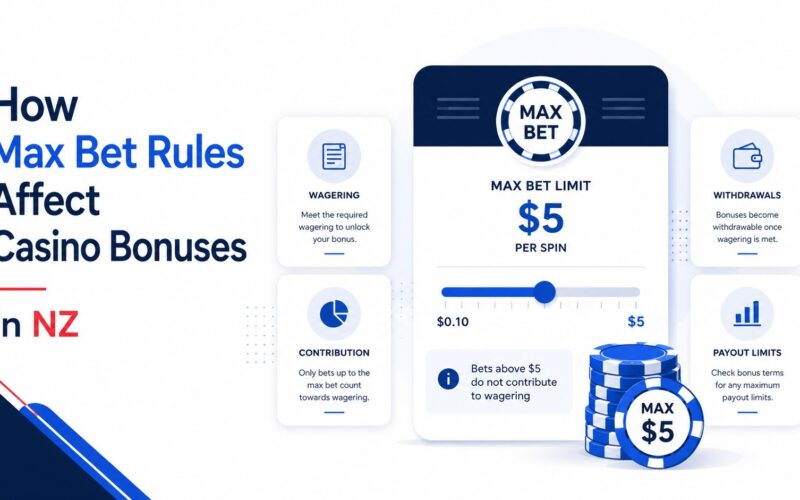
- Whether there is a max bet rule while the bonus is active
- How long the player has to complete the conditions
- Whether verification may be required before a withdrawal is approved
Players who want a broader category-level view first can also compare the different types of casino bonuses in NZ, because max cashout rules tend to matter differently depending on the bonus format.
How do max cashout rules connect to withdrawals?
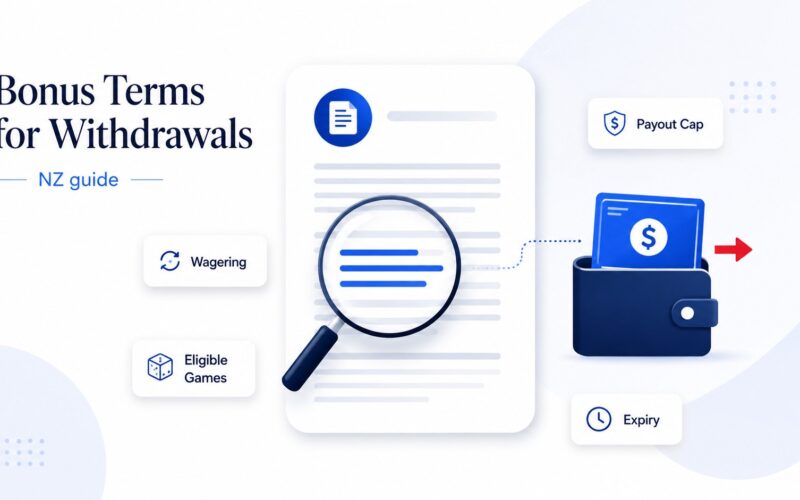
Max cashout rules become most visible at withdrawal stage, because that is when the terms are actually tested. A player may think the key challenge is only meeting wagering, but the final review can still depend on payout caps, eligible winnings, and other bonus conditions.
This is one reason bonus terms and withdrawal expectations should never be separated. If you want the wider payout process explained in more detail, it helps to read how casino withdrawals work in NZ. The approval stage is often where bonus restrictions become real.
Verification may also appear at this point, especially on a first cashout or where account checks are still incomplete. For a more direct explanation of that part of the process, see how casino verification works in NZ.
Editorial summary
Max cashout rules are one of the most important bonus terms to understand because they directly affect what a player may actually be allowed to withdraw. A promotion can still have conditions even after the wagering is completed, and the final payout may be lower than the headline makes it seem.
The most practical takeaway is simple: do not judge a bonus only by size or by whether it sounds easy to claim. Check the payout cap, compare it with the wagering and time-limit structure, and treat the whole package as one set of terms rather than separate pieces.
FAQ
What does max cashout mean in a casino bonus?
It means there is a limit on how much can be withdrawn from bonus-related winnings, even if the promotion conditions have been completed.
Are max cashout rules common in NZ-facing casino bonuses?
They are commonly seen in categories such as no deposit bonuses, free spins offers, and some low deposit or promotional campaigns.
Is max cashout the same as wagering?
No. Wagering sets the play-through requirement, while max cashout sets the payout limit that may apply once the terms are completed.
Can I still withdraw if a bonus has a max cashout rule?
Usually yes, but only up to the cap stated in the promotion terms, assuming the other conditions have also been met.
What should I check first before claiming a bonus with a cashout cap?
Start with the size of the cap, then review the wagering formula, eligible games, time limits, and any verification or withdrawal conditions linked to the offer.
Last updated: April 2026
Related Posts