Casino withdrawal limits are one of the most important banking details to understand before requesting a payout. For New Zealand readers, they matter because the amount shown in an account balance does not always match what can be withdrawn immediately in one step. In many cases, the real payout experience depends not only on approval time, but also on the minimum and maximum limits attached to the cashier.
This guide explains how casino withdrawal limits usually work in NZ-facing online casino use, why those limits can vary, and what players should check before assuming a payout problem is only about timing. The aim is not to promote any operator, but to help readers understand how withdrawal thresholds can affect the practical value of the funds they are trying to cash out.
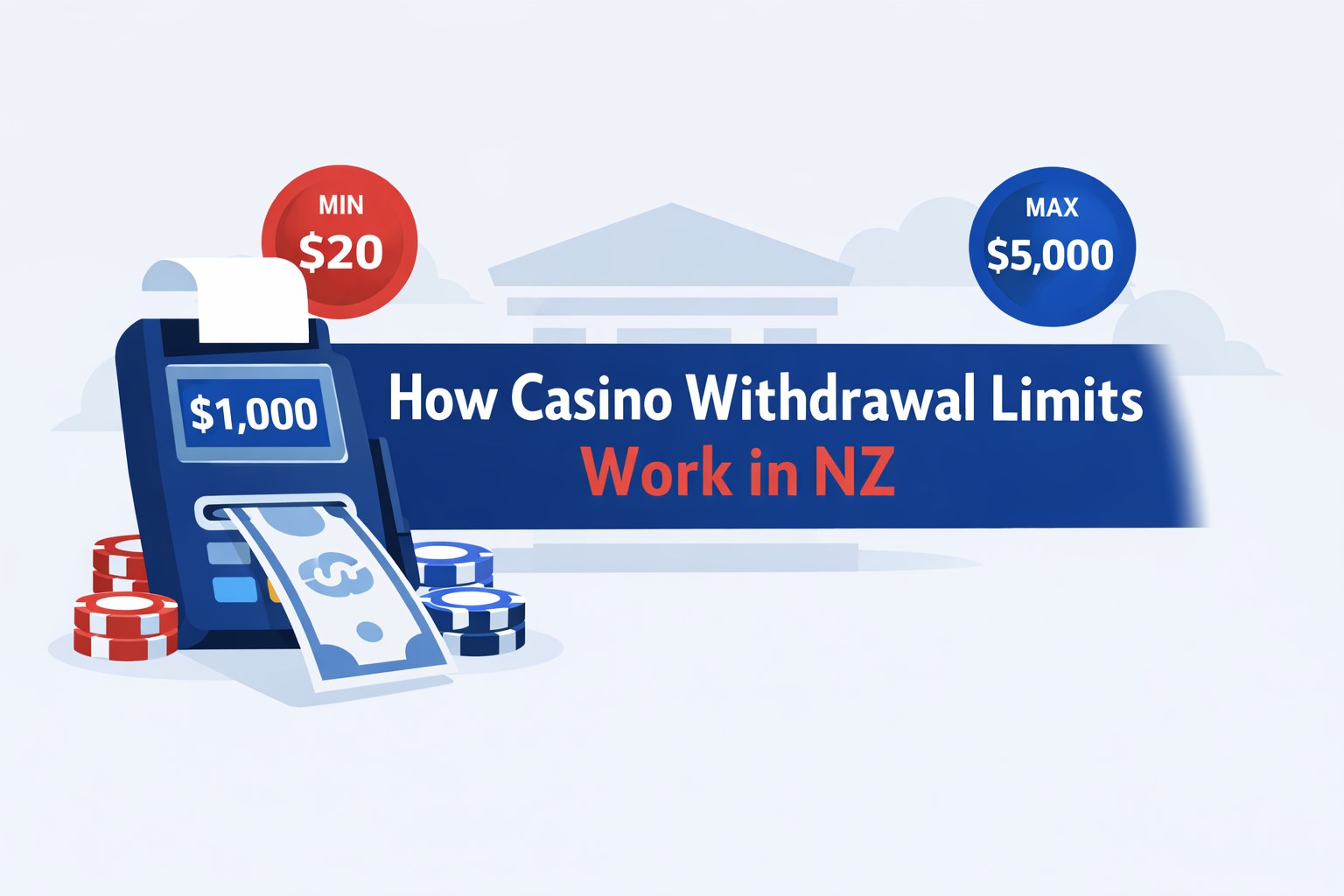
Quick answer: casino withdrawal limits in NZ usually refer to the minimum and maximum amounts a player can request through the cashier, and those limits can vary by casino, payment method, account status, and bonus-related conditions. A payout can therefore be delayed, split, or feel less flexible even when the withdrawal itself has been approved.
Contents
- What are casino withdrawal limits?
- Why do withdrawal limits matter so much?
- How do minimum and maximum withdrawal limits differ?
- Why can withdrawal limits vary so much?
- How can payment methods change withdrawal limits?
- How do withdrawal limits connect to bonuses and verification?
- What should NZ players check before requesting a payout?
- Editorial summary
- FAQ
What are casino withdrawal limits?
Casino withdrawal limits are the minimum and maximum amounts a player may be allowed to cash out through a casino cashier. In practical terms, they define the size range accepted for a payout request rather than simply confirming that withdrawals are available at all.
These limits can appear in different ways. A casino may set a minimum withdrawal threshold, a maximum per transaction, a maximum over a certain time period, or different payout ranges depending on the payment route being used. That means a player can have withdrawable funds in theory while still needing to follow a structured payout framework in practice.
Why do withdrawal limits matter so much?
Withdrawal limits matter because they affect the real usability of winnings once a player reaches cashout stage. A higher minimum can make smaller balances less practical to withdraw, while a lower maximum per transaction can mean larger balances are paid out in stages rather than all at once.
This is why players should not evaluate withdrawals only by asking whether a casino “pays” or “does not pay.” It also helps to understand how casino withdrawals work in NZ as a full process, because payout limits sit alongside approval checks, review stages, and payment handling rather than replacing them.
How do minimum and maximum withdrawal limits differ?
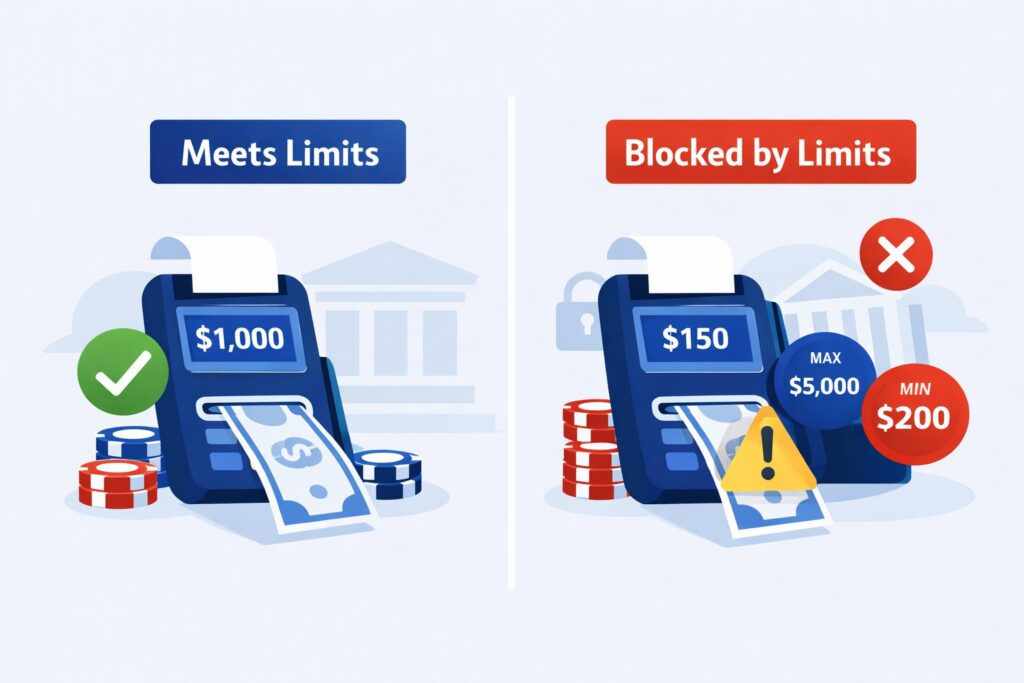
Minimum and maximum withdrawal limits create different kinds of friction. One affects when a player can cash out at all. The other affects how much can be released in a single request or payout cycle.
Minimum withdrawal limits
A minimum withdrawal means the player must reach a certain threshold before the casino will process the request. This can matter when the remaining balance is relatively small or when a player expects to cash out frequently in lower amounts.
Maximum withdrawal limits
A maximum withdrawal limit caps how much can be requested or processed in one transaction, and sometimes within a daily, weekly, or monthly structure. This matters more when a player has a larger approved balance and expects full access immediately.
The distinction is important because a withdrawal can be valid and approved, yet still feel slower or less flexible than expected because of the limit structure rather than because the funds were refused.
Why can withdrawal limits vary so much?
There is no single withdrawal-limit model across all NZ-facing casinos. Limits can vary because the operator applies its own cashier rules, the payment route may work differently in practice, and some account conditions can affect how payouts are handled.
This is one reason a player should avoid assuming that the same payment method will always behave the same way everywhere. Two casinos may offer the same broad payment category while still applying different withdrawal thresholds in their own cashier systems.
Casino-side payout rules
Some limits are simply part of the operator’s own banking structure. These rules can shape both the minimum amount accepted for a cashout and the maximum amount released per request.
Payment-route differences
Different payout methods can create different practical expectations. That is why payment comparisons are more useful when they go beyond the deposit stage. If you are already comparing routes, our guide on Visa vs Skrill for casino payments in NZ helps explain why the broader banking journey matters more than the payment brand alone.
Account review status
Withdrawal flexibility can also depend on whether the account is already fully aligned with the casino’s review process. Verification does not create every limit, but it can still shape how smoothly the payout stage works in practice.
How can payment methods change withdrawal limits?
Payment methods can change the way withdrawal limits feel in practice because different routes are often built around different transaction patterns. The key point is not that one method is always better, but that the payout structure can feel more or less flexible depending on how the casino handles that route.
Cards and direct banking routes
Some players prefer familiar payment options, but familiar does not always mean the most flexible payout path. The method may still be subject to cashier-side payout structure, approval order, or account checks.
E-wallet-style routes
Wallet-based methods are often discussed as practical for banking, but their usefulness still depends on the casino’s own withdrawal framework. That is why a guide such as Skrill casino withdrawals in NZ is useful as a companion piece: the wallet itself is only one part of the real payout experience.
Method-specific limit fit
A withdrawal method may be available, but that does not automatically mean it is the best fit for the player’s balance size or payout expectations. The practical question is whether the method, the amount, and the casino’s cashier rules align comfortably.
How do withdrawal limits connect to bonuses and verification?
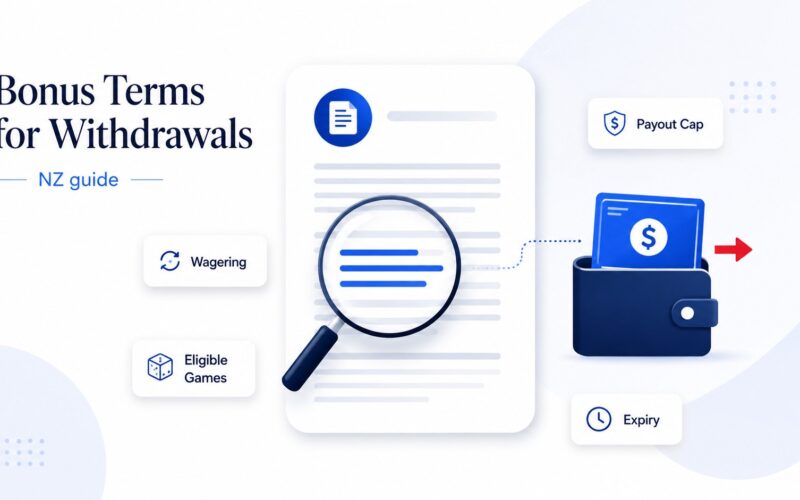
Withdrawal limits do not exist in isolation. They often interact with bonus terms, payment consistency checks, and verification requirements. A player may reach the withdrawal stage expecting a simple payout, only to find that the practical result depends on more than the balance shown in the account.
This is especially relevant where bonus use adds extra conditions. A balance may not be fully withdrawable until the operator confirms the promotion terms were met correctly, and some offers introduce their own practical payout restrictions. That is one reason it helps to understand how max cashout rules work in NZ casino bonuses instead of treating all payout restrictions as ordinary cashier limits.
Verification can also matter at this point. Even if the withdrawal amount fits the stated limit, the request may still move through review stages before funds are released. Readers who want that part explained in more detail can also see how casino verification works in NZ.
What should NZ players check before requesting a payout?
Before requesting a withdrawal, NZ players should look beyond the visible balance and review how the payout structure actually works. In most cases, the most useful checklist includes:
- whether the balance meets the minimum withdrawal threshold
- whether the amount exceeds the maximum allowed per request
- whether the chosen payment method is practical for that payout size
- whether bonus conditions may still affect what is withdrawable
- whether verification or payment-ownership checks may still be pending
- whether the casino explains its payout rules clearly in the cashier or terms
It also helps to separate limit-related friction from general payout delays. If a request feels slower than expected, the cause may not be the limit itself. Our guide on why casino withdrawals get delayed in NZ explains the other common review-stage reasons that can affect timing.
Editorial summary
Casino withdrawal limits in NZ matter because they shape the practical side of cashing out, not just the technical availability of a payout button. Minimum thresholds can affect when smaller balances become useful to withdraw, while maximum caps can determine how quickly larger balances are actually released.
The most useful takeaway is simple: do not judge a withdrawal only by whether it has been approved. Check the payout limits, the method fit, and the surrounding bonus and verification context, because all of those factors shape how flexible the real cashout experience will feel.
FAQ
What do casino withdrawal limits usually mean?
They usually mean the minimum and maximum amounts a player can request when cashing out through the casino cashier.
Can a withdrawal be approved but still limited?
Yes. A casino may approve the withdrawal request but still process it within the payout limits that apply to that account or payment method.
Are minimum withdrawal limits and maximum withdrawal limits the same thing?
No. A minimum limit controls the smallest amount that can be withdrawn, while a maximum limit controls the largest amount that can be processed in one request or payout period.
Can bonus terms affect what I am allowed to withdraw?
Yes. Bonus-related rules can affect what is actually withdrawable, especially where wagering conditions or payout caps still apply.
What should NZ players check before making a withdrawal request?
They should check the minimum and maximum payout limits, the payment-method fit, any bonus restrictions, and whether verification may still be pending.
Last updated: April 2026
Related Posts