Casino deposits can fail for several different reasons, and the cause is not always obvious from the cashier message alone. For New Zealand players, a failed deposit does not automatically mean something is wrong with the casino, the card, or the payment method itself. In many cases, the issue comes from a mismatch between payment settings, account checks, bank controls, or transaction rules applied behind the scenes.
This guide explains why casino deposits fail in NZ, what the most common causes usually are, and what players should check before trying again. The aim is not to recommend any specific operator or payment route, but to help readers understand the practical reasons a deposit may be declined, reversed, or left incomplete.
Quick answer: casino deposits in NZ usually fail because of bank-side blocks, payment-method restrictions, account verification issues, incorrect cashier details, transaction limits, or security checks triggered during the deposit attempt. The real cause often sits in the wider payment flow rather than in the deposit button itself.
Contents
- Why are deposit failures not always simple?
- What are the most common reasons casino deposits fail?
- How can bank-side checks stop a deposit?
- How can payment-method rules cause problems?
- How can account checks and verification matter?
- Why do limits and cashier settings still matter?
- What should NZ players check before trying again?
- Editorial summary
- FAQ
Why are deposit failures not always simple?
A failed casino deposit often looks like a single event, but in practice it can involve several different systems at once. The casino cashier, the payment processor, the user’s bank or wallet provider, and the account status can all influence whether the transaction goes through.
This is why the same payment method may work smoothly at one casino and fail at another, or work one day and fail the next. Deposit approval is usually the result of multiple checks lining up correctly rather than one simple on-off decision.
What are the most common reasons casino deposits fail?
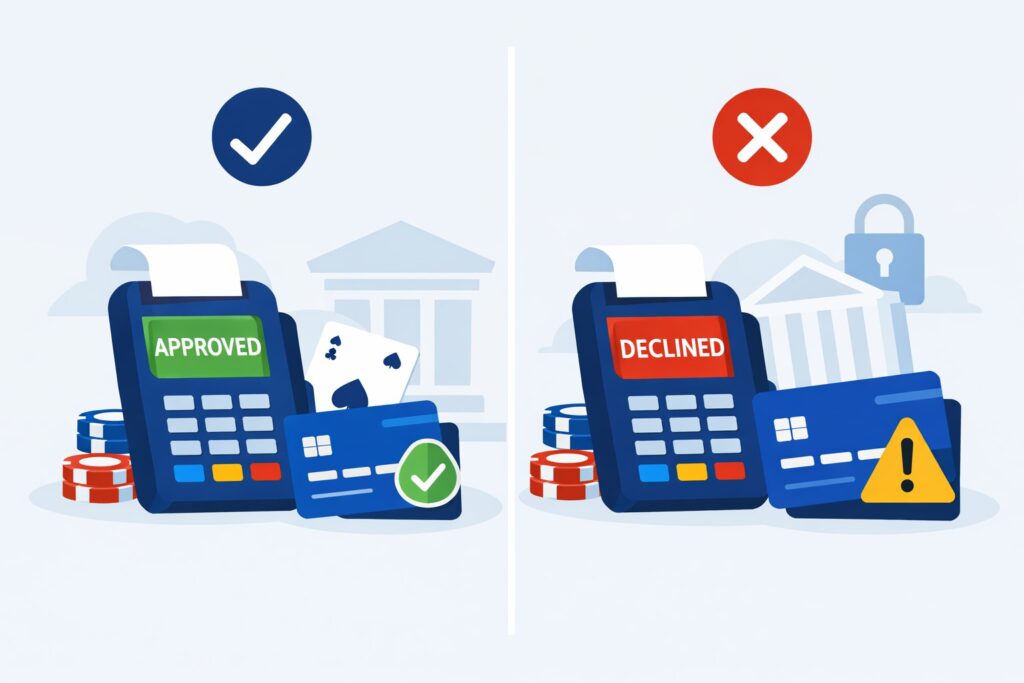
The most common reasons usually fall into a few practical categories: payment approval problems, account issues, limit mismatches, cashier errors, and routine security blocks. The failed transaction message itself may not explain which one applies, which is why users often assume the wrong cause first.
Bank or issuer block
A card issuer or bank may decline the transaction based on internal rules, security checks, or merchant-type restrictions. This can happen even when there are enough funds available.
Payment-method mismatch
Not every method fits every transaction path equally well. A payment option may be listed in the cashier but still run into practical limits depending on account setup, region, or routing.
Account or security review
Some deposits run into friction because the account has triggered a routine check, identity concern, or security flag. That does not automatically mean anything serious is wrong, but it can interrupt the funding process.
Limit or amount issue
If the deposit amount falls outside the accepted range, the transaction may fail immediately or appear unavailable in practice. This is one reason it helps to understand how casino payment limits work in NZ before assuming the issue is only technical.
How can bank-side checks stop a deposit?
Bank-side controls are one of the most common reasons a casino deposit fails, especially with card-based payments. Even when the player enters everything correctly, the bank may still interrupt the transaction if it does not fit the issuer’s risk model or transaction rules.
This can happen because of fraud prevention systems, merchant-category rules, unusual spending patterns, or payment-security steps that were not completed properly. A familiar payment brand does not automatically guarantee a smooth casino transaction. That is also why comparing Visa vs Skrill for casino payments in NZ can be useful in practical terms, not just as a brand-level comparison.
Security challenge not completed
Some card deposits depend on an extra approval stage, such as a banking confirmation step or secure authentication flow. If that stage is interrupted, closed too early, or not completed successfully, the deposit may fail.
Issuer policy
Some banks or card issuers apply stricter rules to certain transaction types than users expect. This does not necessarily mean the card is unusable in general. It means the issuer may not approve that specific deposit attempt in that specific context.
How can payment-method rules cause problems?
Deposit failures can also happen because the payment route itself has practical conditions that are not obvious from the cashier design. A method may appear available but still fail if the transaction path, account status, or funding setup does not match what the payment flow expects.
For example, a card, wallet, or alternative method may behave differently depending on whether the account is newly opened, whether the method has been used successfully before, or whether the transaction size fits that route comfortably. This is part of the wider reason casino deposit methods matter more in NZ than they first appear to do.
Method listed, but not ideal
A payment method being shown in the cashier does not always mean it is the cleanest route for every user. In practice, some methods may be more sensitive to bank checks, while others may depend more on wallet setup or account matching.
Funding-source issue
If a wallet or card does not have the right linked funding arrangement, the deposit may fail before the casino even reaches the approval stage properly. In that sense, the issue may sit upstream from the casino cashier itself.
How can account checks and verification matter?
Account status can matter even before withdrawal stage, especially if the casino applies routine security checks around registration, payment ownership, or unusual activity patterns. Verification is more commonly noticed later, but it can still affect deposit smoothness in some cases.
This is why a failed deposit should not always be viewed only as a pure payment problem. If the account details are inconsistent, incomplete, or flagged for review, the funding process can become less straightforward. Readers who want the broader account-check side explained more clearly can also see how casino verification works in NZ.
It also helps to remember that some casinos want stronger alignment between account identity and payment ownership before the banking flow feels fully stable. That does not mean every failed deposit is a verification issue, but it is one possible piece of the picture.
Why do limits and cashier settings still matter?
Even when the payment method itself is working normally, deposits can fail because the amount or cashier setup does not fit the transaction rules. A player may focus on the payment logo, but the accepted amount range can be just as important.
If the deposit is below the minimum or above the allowed threshold, the transaction may be rejected or appear unavailable. This is especially relevant for readers comparing low-entry offers, because a small advertised deposit amount still does not guarantee that every bonus or payment route will behave the same way in practice. That is one reason low-budget players often end up comparing whether $1 and $5 minimum deposit casinos are worth it beyond the headline alone.
Entered amount does not fit
The most basic explanation is sometimes the correct one: the amount entered may simply sit outside the accepted range for that method or that cashier flow.
Cashier configuration differs by method
Different methods can have different minimums, maximums, or internal routing rules. This means the casino cashier may not behave consistently across all listed options.
What should NZ players check before trying again?
Before attempting another deposit, NZ players should slow the process down and check where the friction is most likely coming from. Repeating the same attempt without understanding the cause can produce the same result again.
- confirm that the deposit amount fits the minimum and maximum limits for that method
- check whether the card or wallet requires an extra security confirmation step
- make sure the payment details entered into the cashier are accurate and complete
- review whether the payment source clearly belongs to the account holder
- consider whether another payment route may fit the situation better
- check whether the account may be under review or missing important setup details
It also helps to think beyond the deposit itself. If the player expects to continue toward bonus use and eventual withdrawals, the better question is not only “how do I get this deposit accepted?” but also whether the full banking path makes sense. That wider flow is explained in how casino withdrawals work in NZ, which is useful because banking friction often appears in stages rather than all at once.
If a deposit succeeds only after several attempts, players should still review the terms around any attached promotion. A successful payment does not remove the importance of the bonus conditions that follow, especially where wagering or payout caps later affect the practical value of the offer. For broader context there, it helps to review types of casino bonuses in NZ.
Editorial summary
Casino deposits in NZ can fail for several different reasons, and the cause is often broader than the payment button itself. Bank-side checks, payment-route friction, account review issues, and limit mismatches can all play a role in whether a transaction succeeds.
The most useful takeaway is practical: do not assume every failed deposit has the same cause. Check the payment amount, the method-specific flow, the account setup, and the wider banking context before trying again. That gives a much clearer picture than blaming the cashier alone.
FAQ
Why do casino deposits fail even when there is enough money available?
Because available funds are only one part of the process. A deposit can still fail بسبب issuer checks, payment-method rules, security steps, or account-related restrictions.
Can a bank block a casino deposit in NZ?
Yes. A bank or card issuer may decline a transaction based on its own security rules, risk controls, or merchant-related policies.
Do failed deposits always mean there is a problem with the casino?
No. In many cases the issue sits with the payment flow, the bank, the amount entered, or the account setup rather than with the casino alone.
Can payment limits cause a deposit to fail?
Yes. If the amount is outside the accepted minimum or maximum range for that method, the deposit may be rejected or not complete properly.
What should NZ players check first after a failed casino deposit?
They should check the amount entered, the payment-method flow, any bank confirmation step, the account details, and whether another payment route may be more suitable.
Last updated: April 2026
Related Posts