Casino payment limits are one of the easiest banking details to overlook, especially when players focus first on whether a payment method is available at all. For New Zealand readers, though, limits can shape much more than the first deposit. They can affect budgeting, bonus use, cashier flexibility, withdrawal planning, and the overall practicality of a casino account.
This guide explains how casino payment limits usually work in NZ-facing online casino use, including the difference between deposit and withdrawal limits, why limits vary, and what players should check before funding an account. The aim is not to promote any operator, but to help readers understand one of the banking details that often matters more in practice than it first appears.
Quick answer: casino payment limits in NZ usually refer to the minimum and maximum amounts allowed for deposits or withdrawals, and they can vary by casino, payment method, account status, and promotion terms. A limit that looks simple in the cashier can still affect how practical the full banking experience feels later on.
Contents
- What are casino payment limits?
- Why do payment limits matter so much?
- How do deposit limits and withdrawal limits differ?
- Why can payment limits vary so much?
- How can payment methods change the limit structure?
- How do payment limits connect to bonuses and verification?
- What should NZ players check before using the cashier?
- Editorial summary
- FAQ
What are casino payment limits?
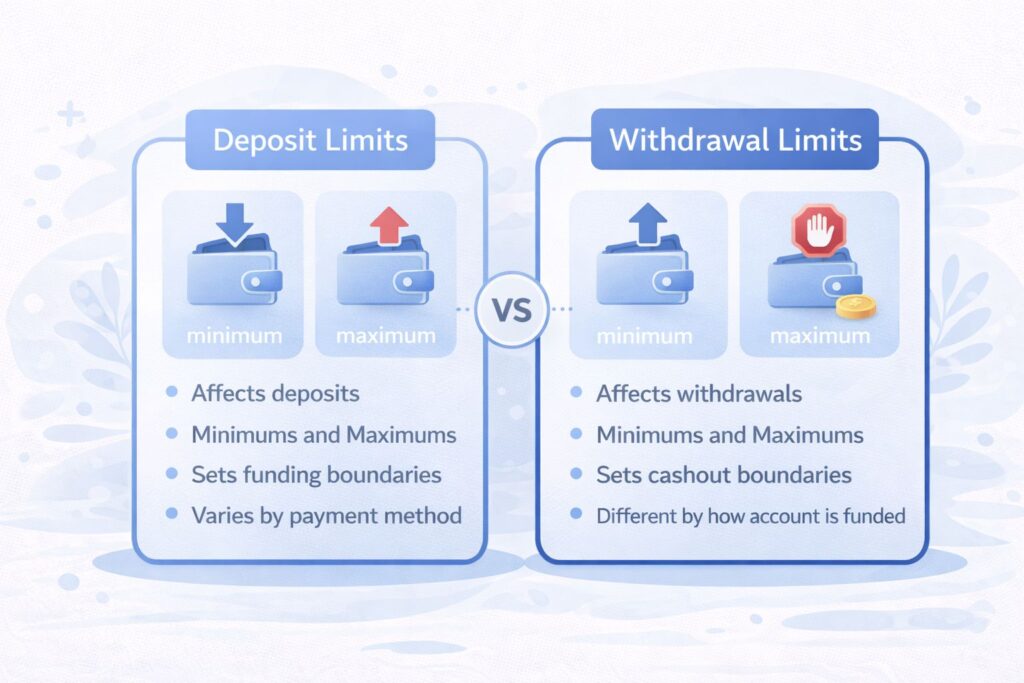
Casino payment limits are the minimum and maximum transaction amounts a player may be allowed to use when depositing or withdrawing. In practical terms, they define the size range the cashier will accept for a given payment action rather than simply showing which methods are listed.
These limits can apply in several ways. A casino may show a minimum deposit, a maximum deposit, a minimum withdrawal, a maximum withdrawal, or even different thresholds depending on the payment route. That means a cashier can look flexible on the surface while still placing meaningful boundaries on how the account can actually be funded or paid out.
Why do payment limits matter so much?
Payment limits matter because they affect real usability, not just technical cashier settings. A low minimum can influence how easy it feels to test a casino, while a higher withdrawal minimum can affect when funds become practical to cash out. The user experience changes depending on how those thresholds fit the player’s budget and expectations.
This is especially relevant for readers comparing low-budget entry points. A small deposit amount may look attractive, but the wider value still depends on the surrounding terms. That is one reason it helps to compare whether $1 and $5 minimum deposit casinos are worth it before assuming that a very low entry limit automatically means a better overall offer.
How do deposit limits and withdrawal limits differ?
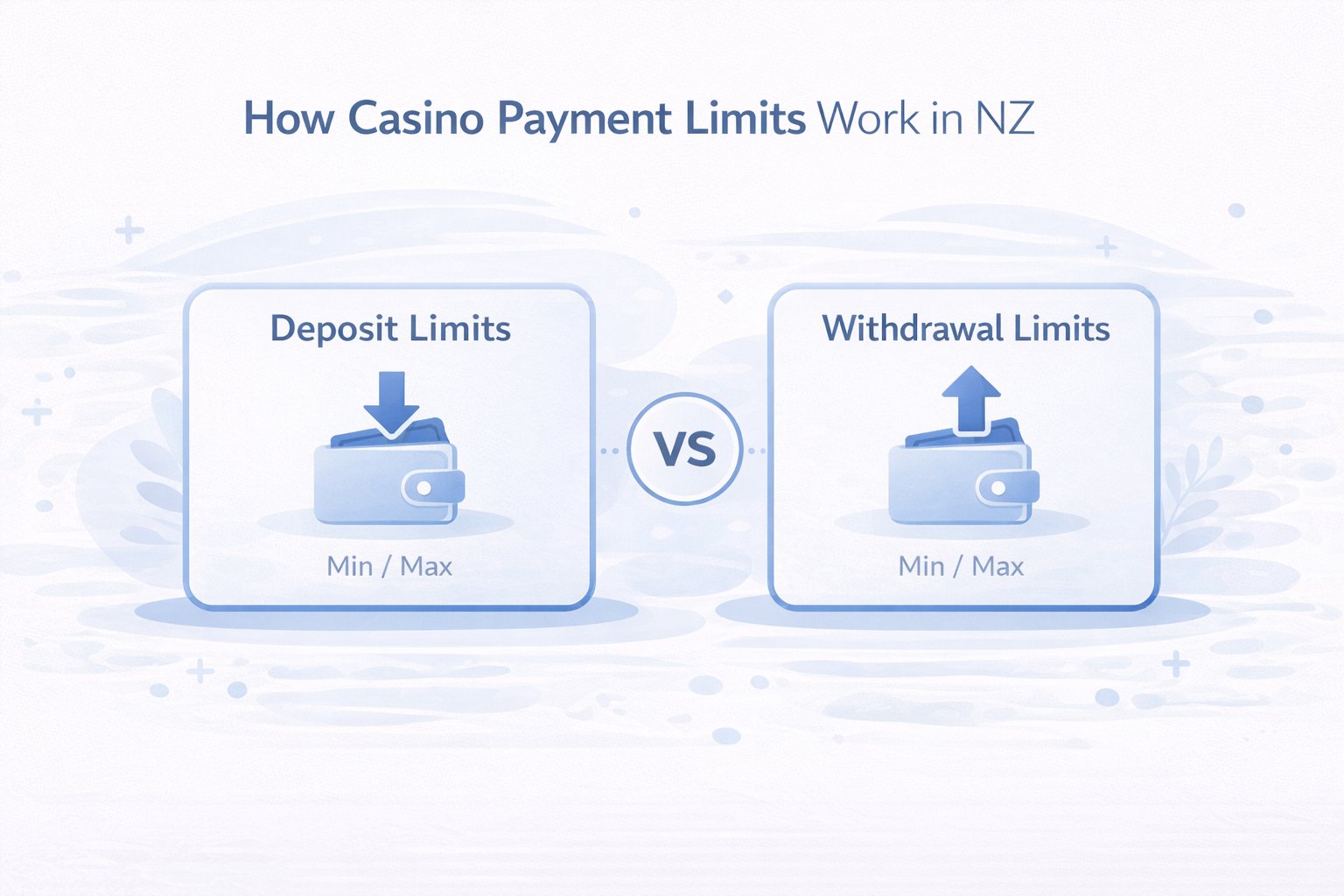
Deposit limits and withdrawal limits are related, but they do not solve the same practical problem. Deposit limits shape how money enters the account. Withdrawal limits shape how money can leave it, including how practical it is to request smaller or larger payouts later on.
Deposit limits
Deposit limits usually affect accessibility and budget fit. A lower minimum may make a casino easier to test, while a higher minimum can make a payment method feel less practical for casual or cautious users.
Withdrawal limits
Withdrawal limits matter more at payout stage. A minimum withdrawal may delay when a player can cash out, while a maximum per transaction can affect how quickly larger balances are released.
If you want the broader payout process explained in more detail, it helps to read how casino withdrawals work in NZ. Limits are only one part of the full process alongside approval checks, review time, and payment handling.
Why can payment limits vary so much?
There is no single universal limit structure across NZ-facing casinos. Limits can vary because the casino itself sets account rules, the payment provider may have its own transaction framework, and some thresholds are influenced by account status, currency handling, or internal risk controls.
This is why players should avoid assuming that one payment method always means the same limits everywhere. Two casinos may both list the same payment option but still handle minimums and maximums differently in practice.
Casino-side rules
Some limits are determined by the operator’s own cashier and risk policies. This can affect both deposits and withdrawals.
Payment-method structure
Certain methods are simply used differently in practice, which can change how limits are presented or applied. This is one reason comparisons such as Visa vs Skrill for casino payments in NZ are useful beyond basic brand familiarity alone.
Account review or verification status
Some banking flexibility only becomes clear after account review steps. Verification does not set every limit, but it can still affect how smoothly certain transactions move through the system. For a fuller explanation of that side, see how casino verification works in NZ.
How can payment methods change the limit structure?
Payment methods can change the way limits feel in practice because different routes are often designed around different user habits and transaction patterns. The important point is not that one method is always better, but that the method can shape what feels practical inside the cashier.
Cards
Card-based payments may feel familiar and direct, but the range shown in the cashier can still depend on the operator’s setup and the route available for that specific account.
E-wallets
E-wallets are often discussed in terms of flexibility and convenience, but their real usefulness still depends on how the casino applies its own cashier rules. For example, older live payment pages on the site already show that guides sometimes describe distinct minimum and maximum ranges for wallet-based use, rather than a one-size-fits-all approach. That supports the need for a separate educational article on limits. :contentReference[oaicite:2]{index=2}
Low-deposit positioning
Where a casino promotes very small entry points, payment limits become even more relevant. A low minimum may look appealing, but the full banking picture can still be shaped by bonus terms, withdrawal thresholds, and practical restrictions that only become visible later.
How do payment limits connect to bonuses and verification?
Payment limits do not sit in isolation. They often connect to the wider bonus and account-review experience. A small deposit may qualify for a promotion, but that does not automatically mean the offer is easy to use once wagering, payout conditions, or later review steps appear.
That is why it helps to understand the broader landscape of types of casino bonuses in NZ rather than looking only at the number shown in the cashier. Depending on the promotion, practical value may still depend more on terms than on the payment threshold itself.
Limits can also matter indirectly at verification stage. If a payment route triggers ownership checks or a withdrawal review later on, the practical effect of a “convenient” method may look different once documents or account confirmation are required. That is part of the same wider pattern readers already see in topics like verification and payout delays. :contentReference[oaicite:3]{index=3}
What should NZ players check before using the cashier?
Before depositing, NZ players should look beyond simple payment availability and review how the limit structure fits the wider account experience. In most cases, the most useful checklist includes:
- whether the minimum deposit suits the planned budget
- whether the maximum deposit is relevant to the intended spend level
- whether a minimum withdrawal may create friction later
- whether the payment method appears practical for both funding and cashout expectations
- whether the bonus terms make the payment limit less useful than it first appears
- whether the casino explains its banking rules clearly enough before the player commits funds
It also helps to think about payment choice more broadly. If you want that bigger-picture view, our guide on why casino deposit methods matter more in NZ is the natural companion piece to this topic once both articles are live.
Editorial summary
Casino payment limits in NZ are more than simple cashier numbers. They shape how easy an account is to fund, how practical it feels to withdraw later, and whether the overall banking setup matches the player’s budget and expectations.
The key takeaway is straightforward: do not judge a payment method only by whether it is listed. Check the minimums, maximums, and wider transaction context, then compare those limits with the bonus, verification, and withdrawal reality that may follow.
FAQ
What do casino payment limits usually mean?
They usually mean the minimum and maximum amounts a player can deposit or withdraw through a given cashier setup or payment method.
Are deposit limits and withdrawal limits always the same?
No. A casino may apply different limits to deposits and withdrawals, and those thresholds may also vary by payment method.
Can payment limits vary between casinos that use the same method?
Yes. Two casinos may list the same payment option but still apply different transaction thresholds in practice.
Do payment limits affect bonus value?
They can. A low deposit limit may look attractive, but the real value of a promotion still depends on the broader bonus structure and payout conditions.
What should NZ players check first before depositing?
They should check the minimum and maximum transaction amounts, how those limits fit their budget, and whether the wider banking and bonus rules make the method practical.
Last updated: April 2026
Related Posts